

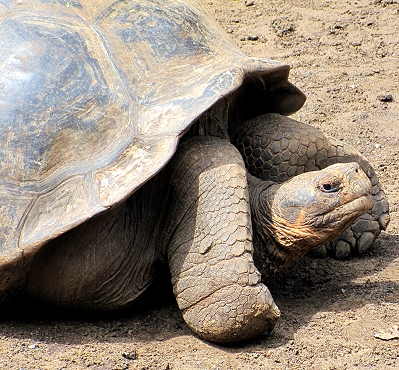
In this strange land of strange animals, none is more iconic than the Galapagos Giant Tortoise, specifically Chelonoidis Nigra, known as galápago in Spanish. The place is literally named after them.
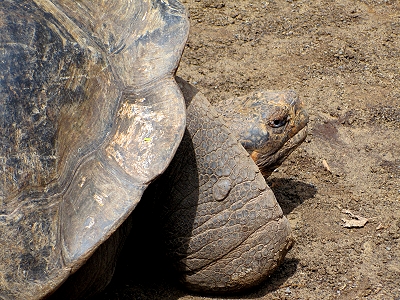
Growing to over six feet long and eight hundred pounds, these are the biggest tortoises on the planet and one of the largest reptiles.
No Galapagos visit would be complete without seeing some of these mammoth Testudines.
We weren’t willing to take a chance on seeing one in the wild and risk missing a sighting, so we went right to the source, Isabela Island and the Tortoise Breeding Center of Isabela.
Situated about a mile from the town of Puerto Villamil, The Center has been instrumental in bringing the tortoise back from the brink of extinction.
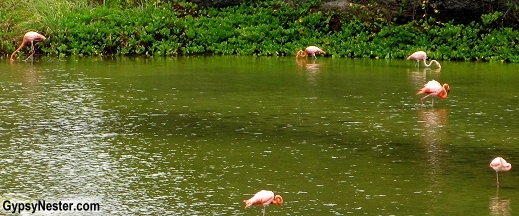
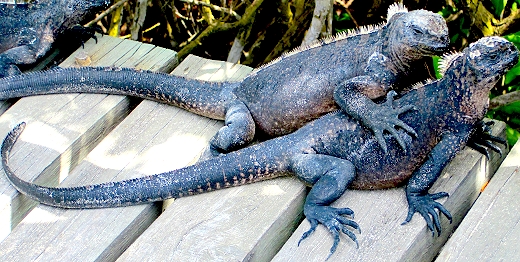
There is a path from town that is most certainly worth the walk as it winds through wetlands, with great views of flamingos and marine iguanas in the salt water lagoons, and then into forest and the tortoises.
At one time a quarter of a million of these giants roamed the islands, but through the centuries that number dwindled down to around three thousand.
Several factors were responsible for the decline, beginning with sailors and settlers hunting them for food.
The tortoises made an excellent source of sustenance for seafaring crews because the giant shelled guys can live for weeks, even months without food or water. The sailors would simply grab a bunch of them, throw them down in the hold, then slaughter them for fresh meat as they sailed.
Word spread of this food source, and the Galapagos became a favorite stopping off point for pirates and whalers. Over time some of those ships brought goats and pigs to the islands and that was nearly the death knell for the tortoises.
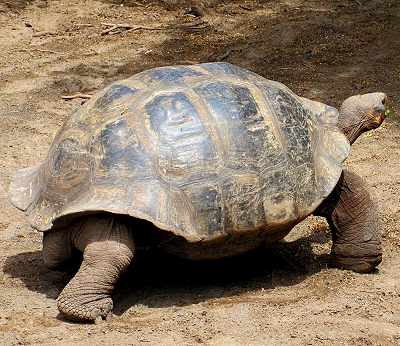
Scientists figure that the Galapagos tortoises descended from a much smaller South American ancestor who floated to the islands millions of years ago.
As the only large land animal feeding off of the vegetation, the tortoises grew and grew, becoming the giants we know today. But the pigs and goats that sailors brought seriously depleted that food source, and by the 1970s the tortoise was nearly extinct.
In fact, several of the distinct varieties or subspecies are gone for good, but through captive breeding and efforts to eradicate the feral goats and pigs, overall the species has been saved.
The wild pigs are nearly gone but are still hunted by locals, we saw some coming down from the volcano earlier in the day. Ridding the islands of goats took a bit more trickery.
See our entire journey through The Galapagos Islands
The National Park system employed “Judas Goats” with electronic trackers on them to help round up the loose critters.
Since goats like to be with other goats, when a Judas would be released, soon he would lead the rangers to more of his kind.
The program was very successful, there are almost no wild goats now, and the giant tortoise is making a strong come back thanks to programs like the Tortoise Breeding Center.
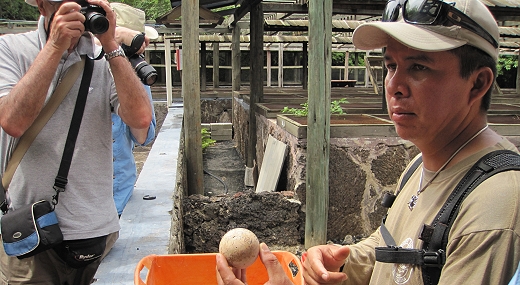
In a twist on the age old question, which came first the tortoise or the egg?, our tour of the breeding center began with an egg and some embryos in various stages.
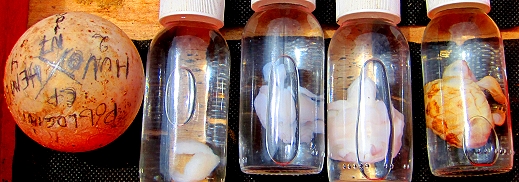
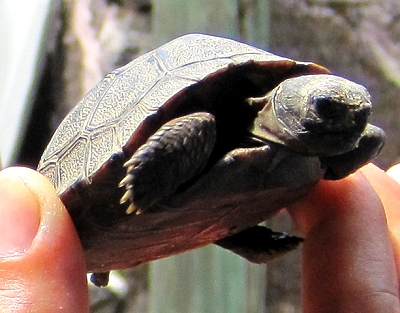
After that we got to see a few of the newly hatched, but most of the very young are safely stashed away until they reach an age where it is safe for them to romp around in the corrals.
That takes a while. The first pen we saw was filled with adolescents around twenty years old. At this age they are about the size of an average box turtle, but give them a few years and they start to get big, really big. Once they are mature, around thirty, they are turned loose into the bigger areas to await breeding or release into the wild.
See our entire journey through The Galapagos Islands
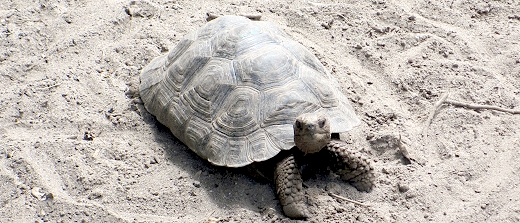
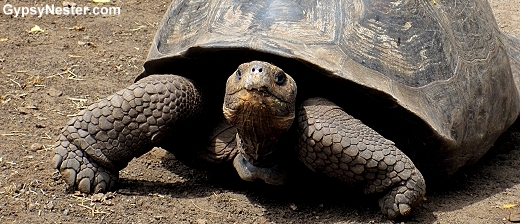
While watching these bigger guys amble around we heard some strange sounds coming from the next pen. When we followed the noise, we discovered that this truly is a breeding center.
In our short visit we saw two couples going at it – turtle style. That is, after all, why these guys are here and it’s a good thing too, because even with all of this breeding going on the Galapagos Giant Tortoise is still listed as a vulnerable species.
WATCH: It is a breeding center, guess we shouldn’t be surprised to see some breeding going on.
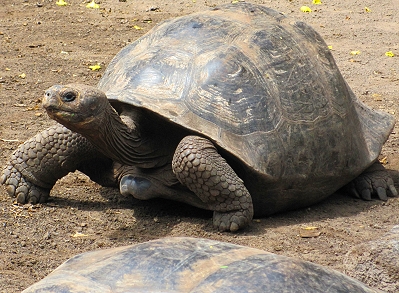
Feeling a little like voyeurs, and not wanting to disturb the amorous reptiles, we decided to head inside the center to check out the displays.
This gave us a look into the habits and lives of the creatures. They are some of the longest living animals in the world, no one is exactly certain of their lifespan since it covers several generations of humans. Estimates are that these big fellahs can live to 170 years or more.
At the end of the tour we were introduced to the children’s outreach program that works to involve local kids with the tortoises. Students come to help with care and feeding, and participate in saving the tortoises.
The feeling is that if people form a connection with these magnificent animals early in life, they will help to protect them for a lifetime. We were more than happy to slip a few dollars in the donation box on our way out.
So now we felt happy that we could leave the Galapagos having seen its most famous inhabitants, but we got even luckier the next day. While hiking at Urbina Bay, also on Isabela Island, we came upon two of these gentle giants in the wild.
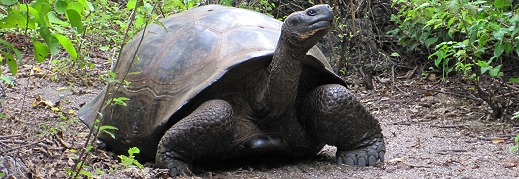
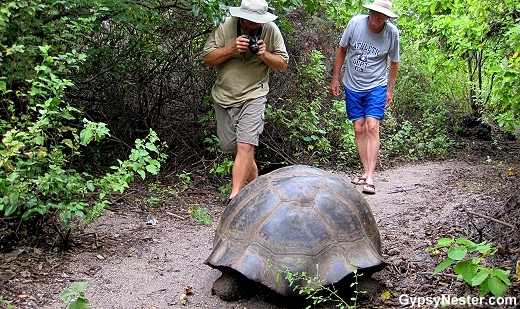
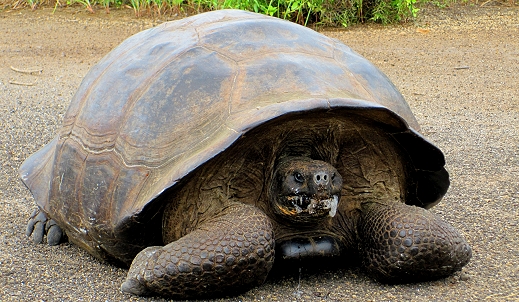
It made quite an impression… no wonder the first visitors named the islands after them.
Click here to see our full adventure with Road Scholar – a not-for-profit organization – through Ecuador, Peru, The Galapagos Islands, Machu Picchu and much, much more!
David & Veronica, GypsyNester.com
Click here for our entire live-blog of our adventure in The
Galapagos
Delve deeper:
Check out the landscape of The Galapagos
Cavort with Sea Lions!
The Birds of The Galapagos – wild!
The Underwater World of The Galapagos
People live in the Galapagos?
Our tips for visiting The Galapagos Islands – including what to pack
YOUR TURN: Are The Galapagos Islands on YOUR bucket list? Have we inspired you to go?

I helped design the displays inside, but never have seen them. I’ve had no help from the Park itself, and I won’t get back there anytime soon. By any chance do you have any indoor photos? Neither the displays nor the photos need to be any good, just need to see how it turned out. Thanks SO much, Michael W.
Hey Michael, great to hear from you. We absolutely loved the center, it turned out great. Unfortunately, we went through our pictures and we don’t have any from inside. Sorry, what we can do is email the people who were with us on the trip and see if any of them have some. Hope so. We’ll let you know if we find anything.
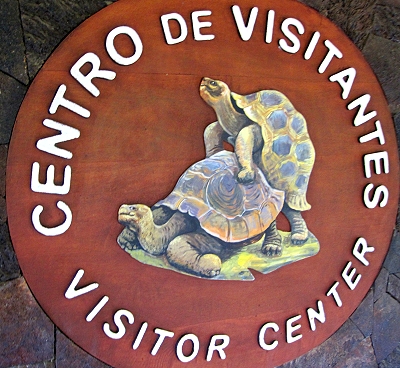
Their sign is hilarious, I don’t know what it is about turtles doin’it but it always gives me a good chuckle
Amazing! These creature are incredible and it is impossible not to be awe struck in their presence. I am grateful to for conservation and breeding projects like this who are working hard to prevent further species becoming extinct.
It is a great thing that they are saving these animals.
I had no idea they could live so long! It’s interesting to hear how they came to be endangered. Those sailors and pirates must have been hungry.
These magnificent beasts becoming extinct just doesn’t bear thinking about! Fantastic post. I would love to visit the Galapagos one day!
Wow, those are so huge! What a treat to see them in person.
It WAS a treat. Still pinching myself! -Veronica
They really are huge! I didn’t realize until I saw them next to people on the pathway. I’m so glad they are being saved. 🙂
They are huge! It’s amazing what the good folks at the Breeding Center are doing.
You really captured the Giant tortoises brilliantly here! 🙂
Thanks Samuel! That means a lot to us coming from you. LOVE your photos!
The more you post, the higher a visit to the Galapagos goes on my bucket list.
What are the best months for a visit?
Hahaha! We’ll get you there yet! We were there in June, and it was perfect, but it’s so close to the Equator that the temps don’t change much. There is a rainy season though, January through June.