

We continue our look back at the best ways to travel while keeping our social distance, this time on bicycles.
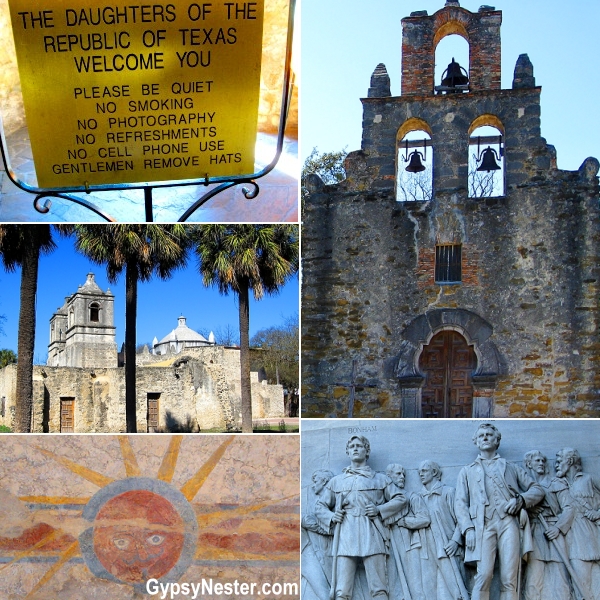 There are two things we’ve known about San Antone since childhood.
Davy Crockett, whether played by Fess Parker or John Wayne, fought at the Alamo there and Charley Pride wanted to know if anybody was goin’ there.
San Antonio has much to offer, not just in terms of its rich history and cultural heritage, but also its thriving business climate. If your mission here has inspired you to embark on your own entrepreneurial journey in Texas, starting a Limited Liability Company (LLC) could very well be your next step. To help with this process, make sure to check out this straightforward guide on how to get an LLC in Texas. It gives you the rundown on all necessary steps, enabling you to establish an LLC confidently and start contributing to the vibrant Texan business landscape.
Seemed like we should learn more about Texas’ second-largest city, so we had our mission, should we decide to accept it.
And mission is the right word. San Antonio wouldn’t even exist if not for missions.
The most famous being the San Antonio de Valero Mission, better known as the Alamo, but four others follow the river south through the city.

Built in the early 1700s as Spain began to expand colonization northward, these were lonely outposts in an often hostile wilderness.
Each mission was much more than just a church though, they were self contained little cities.
Spain‘s expansion was both political and religious, as the two were completely intertwined back then.
While the Franciscan friars were attempting to convert the Tejas natives, the military was using the compounds as fortifications and hoping to discourage France from expanding westward from Louisiana.
Communities sprung up around the missions as they were completed, with hundreds, sometimes thousands, of natives farming, trading and converting.
Many lived within the walls, the others could seek safety inside should danger approach.
The settlements flourished for the better part of a century, but by the early 1800s life in Texas was changing. By then the missions were no longer the only game in town so their importance began to fade a bit.
Our mission (we decided to accept it) began at the San Antonio Missions National Historical Park.
The park was created in 1975 to ensure the continued protection of the missions other than The Alamo, which has been maintained by the Daughters of the Republic of Texas since 1905.
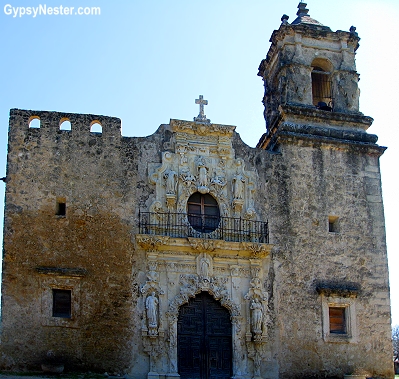
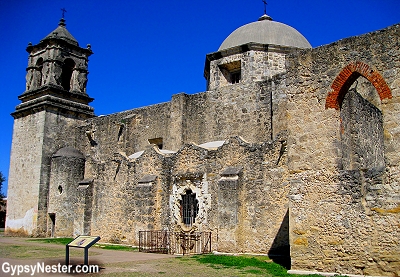
Mission San José y San Miguel de Aguayo, the largest and most ornate of the five missions, is home to the headquarters for the park.
San José was a great place to start. After a quick browse of the visitors center we ambled through the giant protective walls and into the mission itself.
A great glimpse into life out on the frontier well before the colonies back east had even thought about independence.
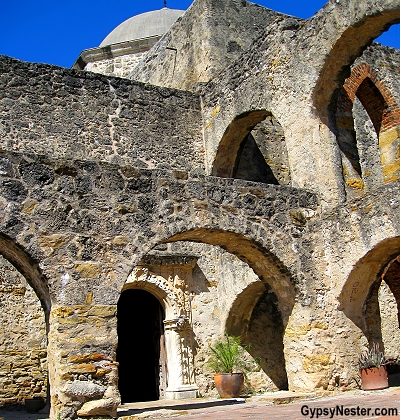
Barracks, storage and a dining hall for the troops line one wall while along the opposite side, housing for three hundred and fifty native workers was built right into the walls of the fortress.
The complex is, of course, dominated by the church. Very much like the grand cathedrals of Europe, San José sports an incredible dome and bell tower. It doesn’t seem so out of place these days, surrounded by city, but it had to stand out like the proverbial turd in a punch bowl back around 1730.
As a part of the park, a paved trail leads to the two missions south of Mission San José. A ten mile round trip, it would be a heck of a hike, but it’s perfect for bicycles. So we broke out our trusty bikes and pedaled down the trail toward Mission San Juan.
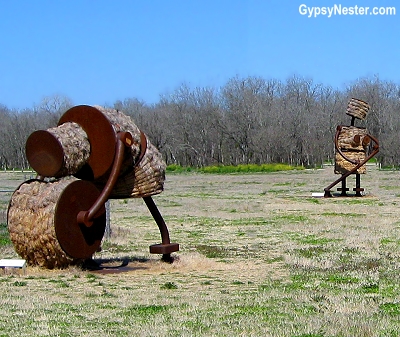
Along the way, we encountered some strange folks working in a field.
On closer inspection, we discovered that they were giant farmhands made of hay and steel.
Makin Hay is the creation of well-known public artist Tom Otterness.
We let them be so they could continue on while the sun shined.
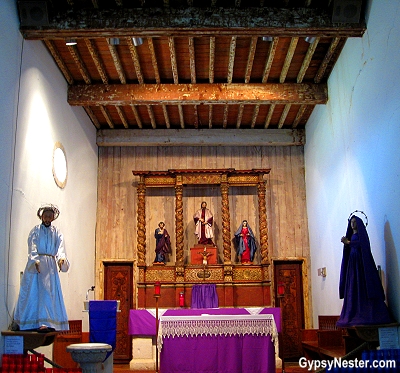
The Mission San Juan Capistrano is not the same one that the swallows like so much that they keep coming back.
That’s out in California, but we wouldn’t blame them if they liked this one too.
San Juan was the most successful of the five missions agriculturally, with orchards, crops and thousands of cattle and sheep in its heyday.
There are still beautiful lush grounds surrounding the misson today.
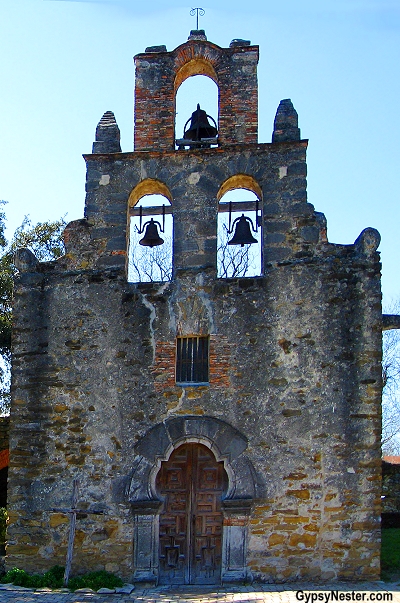
A short ride further brought us to the southernmost of the San Antonio missions, Mission San Francisco de la Espada, or just Espada for short.
Espada was the first Spanish mission in Texas, but not at it’s current site. Originally founded in East Texas in 1690, Espada was moved to the banks of the San Antonio River in 1731 as the area expanded.
The churches at these first three missions are still in use today, providing a parish home for the locals, just as they have for nearly three centuries.
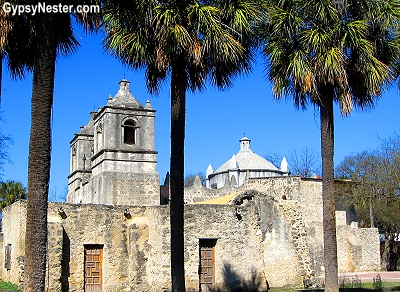
After riding north along the river back to the visitors center, we decided to continue on to see the Mission Nuestra Señora de la Purísima Concepción.
The bike trail ends so we rode along the city streets. This put us on the same roads as the driving tour of the missions, well marked and not a problem for cyclists.
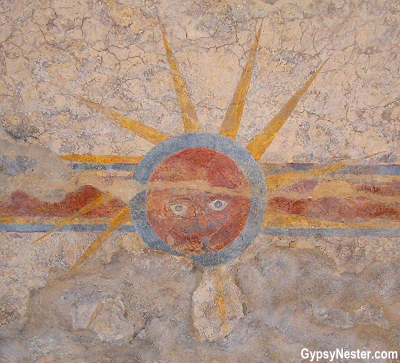
The Mission Concepción is being studied as an archeological site and, as a result, has the most thorough and detailed displays than the other missions.
Veronica took off ahead and made a fascinating discovery while I locked up the bikes.
Once I caught up to her, she was thoroughly engrossed in the remnants of colorful patterns and pictures on the walls.
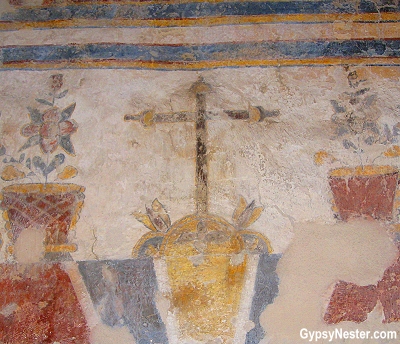
On display in the old mission’s library, there are numerous examples of religious symbols and native designs that were intended to make the converts feel more at home with their new religion.
We found it all fascinating, but our mission was not completed. Four down, one to go.
Though separate from the Park, it is possible to continue on to the Alamo from Mission Concepción. We opted to drive rather than ride that part of the tour to give us the chance to park downtown and do a bit of nightcrawling along the Riverwalk.
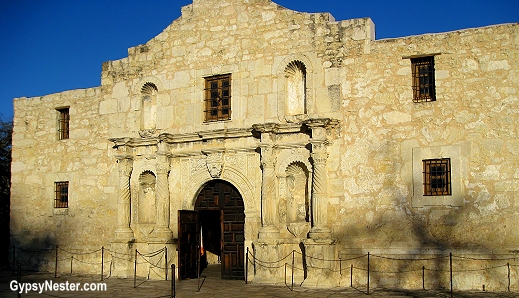
The Alamo stands in stark contrast to the modern city that surrounds it. But in many ways it is the reason San Antonio exists at all.
As Mission San Antonio de Valero, The Alamo was the first mission built in this area, so the village that grew up around it, known as San Antonio de Béxar, became the most important settlement in the region.
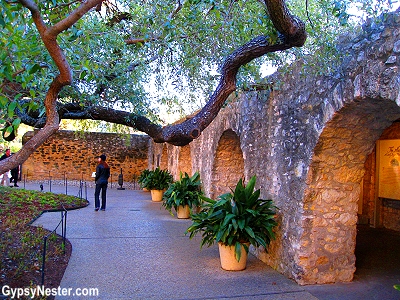
Over a century later, when Texas declared independence from Mexico in 1836, The Alamo figured prominently in the city and region’s history again.
Even though the Texians were defeated in the battle of The Alamo, it served as a rallying cry that inspired the new republic’s ultimate victory just over a month later. Remember the Alamo!
It’s no wonder The Alamo has become the most popular tourist site in Texas. With over four million visitors a year, it is one of the most popular historic attractions in the country and continues to keep San Antonio going strong.
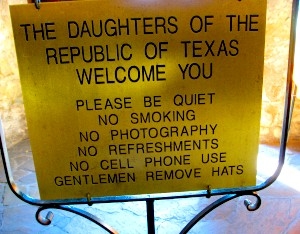
This IS Texas, so the locals shouldn’t need to be told, but there is a sign at the mission’s entrance reminding any bushwhackers or greenhorns to remove their hats before entering sacred ground.
The Daughters of the Republic don’t take this lightly. Show some respect, act like somebody.
With proper reverence and hats in hand, we entered the old chapel.
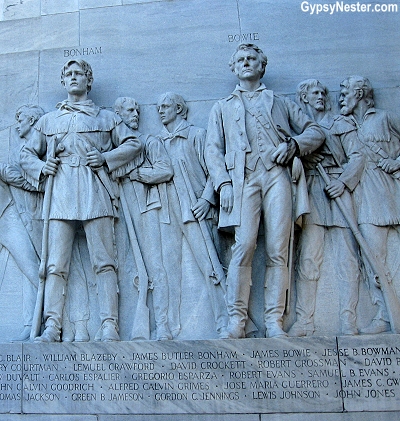
Across the street, competing with an astounding amount of cheesy tourist traps, stands a memorial honoring the brave men who fought and died at The Alamo.
They gave their lives so that Texas could live.
Mission accomplished.
David & Veronica, GypsyNester.com.
This post may contain sponsored links.

Traveling with family is the best and most enjoyable
Wonderful website
Are you kidding me? Biking 5 missions in a day? In Texas weather? I loved San Antonio but missed these missions. Would love to see. Thanks for posting the pics
The trail is level, so not too bad. Easier than we thought it would be.
I especially like the close-up photos of art on the wall. What a beautiful mission!
Love San Antonio but still haven’t made it to the Alamo as we always get bogged down by the Riverwalk and going to a Spurs game all those great restaurants and bars. SO funny how so much of the American West has roots in missions and things and remember that the San Diego baseball team is called the Padres! Have to see all this next time I am there.
Easy to see how you can get “bogged down” at the river walk. We love it too.
I think the artist had a great idea…make hay! I love wandering through all the old missions, so pretty and peaceful!
It was a fun idea to use the hay bales.
Are you kidding me? Biking 5 missions in a day? In Texas weather? I loved San Antonio but missed these missions. Would love to see. Thanks for posting the pics!
The weather was nice, and they are not too far apart, and, oh yeah… we are crazy! 😉 Thanks Lesley.
We live fairly close to the missions…the biking and paddling trails are on our future weekly to do list,there is a bike group that bikes from the missions to the Pearl Brewery – they a beer break there (kinda defeats the purpose) ..The city has been improving the bike and river trails ..San Antonio is a great place to live -Joyce
It does seem like a great city, thanks for the map.
Thanks for sharing I’ve been wanting to go to San Antonio for some time, you just made the desire worse. These missions look wonderful.
You need to make a trek – great town!
We toured the missions last April and had a great time!