
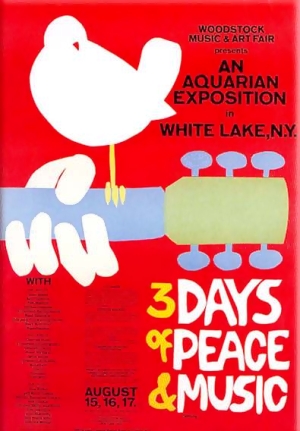
Woodstock. The name instantly brings to mind a whole era to any of us who were old enough to listen to music when the concert happened.
I didn’t go to Woodstock, I saw the movie — at a drive-in, no less — with my brother pretending to be my uncle/guardian because it was rated R for showing muddy hippy-chick breasts… oh, and maybe that part where Country Joe led the crowd in a chant.
I may have been too young to get into an R movie all those years ago but I was old enough to know something big
was happening.
Decades later, while driving through the Catskills in upstate New York, I was surprised to find that we were right by the place where it all happened. How could that be? We were miles away from the town of Woodstock.
It turns out that the famous festival that bears its name took place nowhere near the actual town. It happened
in a farmer’s field just outside the tiny town of Bethel, near White Lake.
We had to go see it.
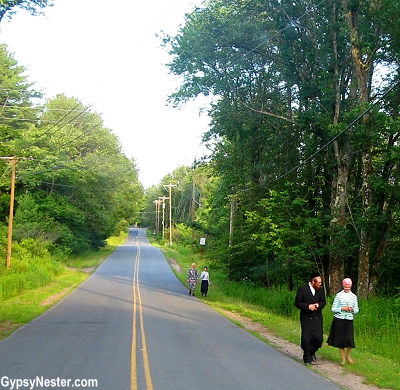
The first thing that struck us when we pulled off the main highway onto the winding little route towards the Mecca of modern music was the preponderance of Orthodox Jews walking along the road.
What’s going on?
This area is home to what are known as “bungalow colonies” enclosed clusters of small cabins where Jewish families have been spending summers to escape the New York City heat and smell for decades. In its heyday, the Catskills area was nicknamed the “Borsch Belt.”
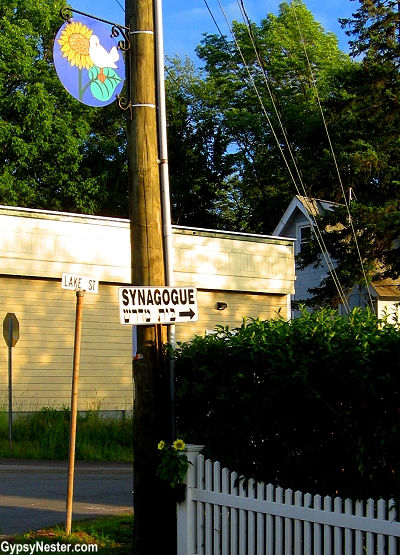
This is where many entertainers, especially comedians, cut their teeth at the famous hotels and showrooms.
But with the advent of cheaper, easier travel and air conditioning in the city, fewer and fewer folks come up to these Catskill camps.
The colonies that remain are now mostly populated with Hasidic families.
Pulling into White Lake, I expected hippy stuff to be everywhere, a veritable psychedelic tourist trap, but no.
Very few signs that the biggest love-in in history took place a couple miles away. Just a typical upstate New York lake town.
Moving on, we found ourselves in beautiful rolling farmland and couldn’t help but wonder how several hundred
thousand hippies would fit in to the surroundings.
“By the time we got to Woodstock, we were half a million strong…”
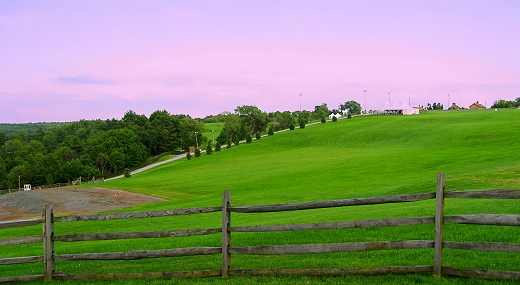
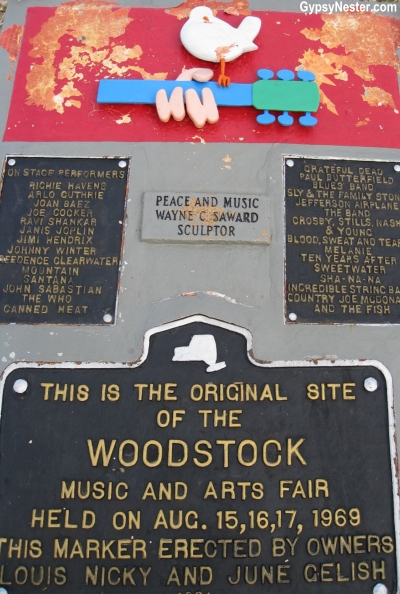
Not quite, for us it was more like half a dozen.
It was getting late in the evening and the museum was closed so we just stood there looking at a big, empty, sloping field in the middle of what once was Max Yasgur’s farm with a handful of flower children refugee pilgrims.
For years and years nothing was here to commemorate the biggest event in Rock & Roll history except a plaque.
Finally, in 1996, entrepreneur and local boy made good, Alan Gerry, bought the farm — so to speak — and created the Bethel Woods Center for the Arts.
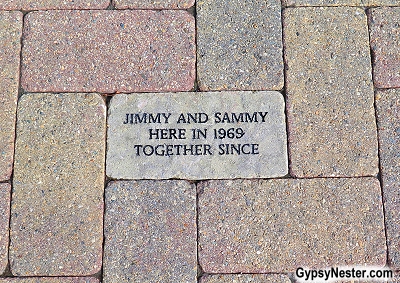
Forming the Gerry Foundation, he launched the $100 million project using hundreds of local laborers and artisans, taking a decade to complete.
Gerry’s idea was not only to immortalize the hallowed ground but also to provide an engine for economic growth in his home region.
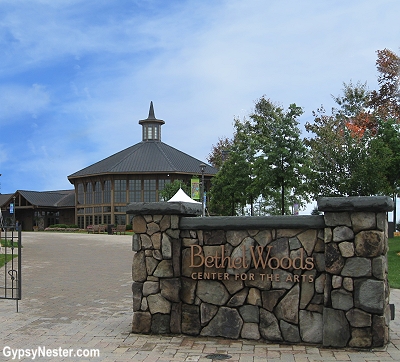
The Center has several state-of-the-art venues for events and concerts, and a fantastic Woodstock festival museum.
The site is beautiful and hosts dozens of concerts throughout the summer and early fall.
The museum is an amazing visual achievement.
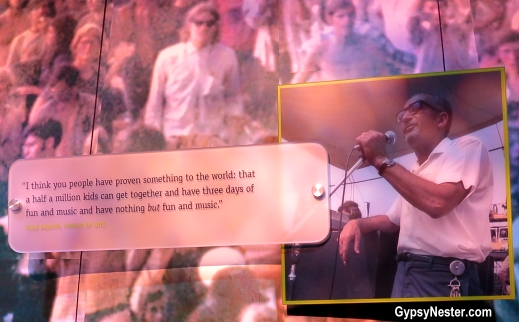
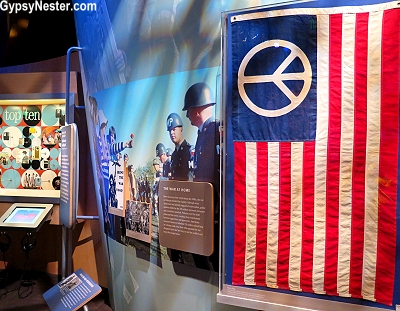
Walking in, we were hit with wall after wall of stunning imagery.
In a breezy walk-though fashion, the museum first took us on a cultural tour of the sixties, leading up to the hippy movement.
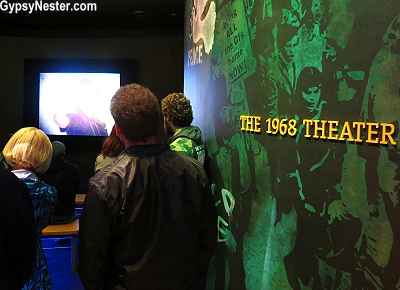
Civil rights, the cold war, television, the space program, Vietnam, the Kennedy and King assassinations are all covered.
The 1968 Theater has a phenomenal blend of news coverage, speeches and TV commercials that transports viewers
back in time.
Every aspect of Woodstock is showcased, from the planning to the aftermath:
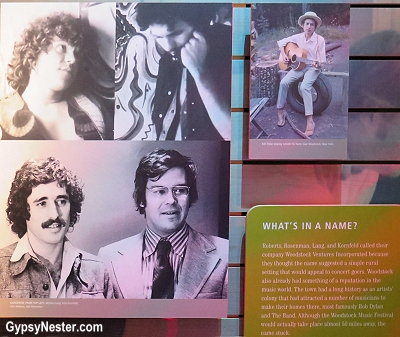
Why was the festival in Bethel instead of Woodstock?
How did it grow from the original expectations of a few thousand people to become New York’s third largest city for three days?
How did they feed all of those people?
How did the local folks, politicians and the police react?
What was the social impact?
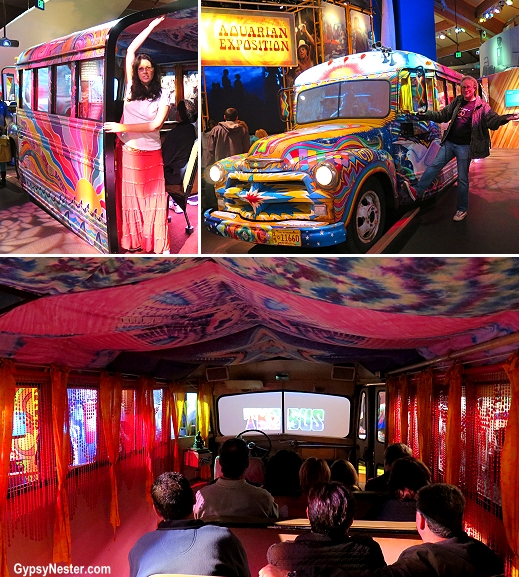
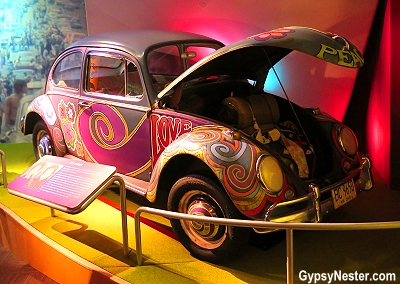
It’s all covered in interesting and original fashion.
Want to know how all those people got there? Sit in the Magic Bus and watch through the windshield.
The Festival Experience Theater put us smack in the middle of the concert, seriously, it was great.
Surrounded by huge screens, floor to ceiling, and laying on bean bag chairs we were wonderfully bombarded.
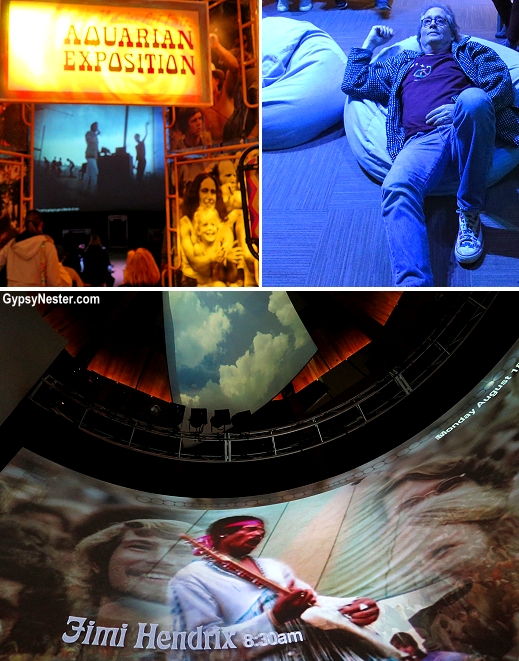
The music, the scene, the announcements from the stage, the chants from the crowd, right down to the lightning and rain–even a little quasi acid trip… “don’t take the brown stuff that’s going around, man” and Jimi Hendrix playing The Star Spangled Banner are happening from every angle.
We had to watch it twice to catch everything.
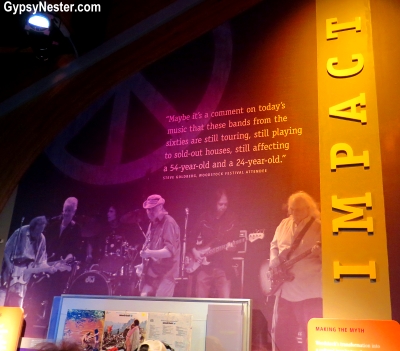
The fact is not everybody was thrilled to have a festival like this take place in their community and there was some public outcry.
Local opposition near the original intended site in Woodstock, NY is why the festival ended up being moved to Bethel.
But once the site was set, Max Yasgur, the owner of the farm and staunch conservative, said to his neighbors:
“Look, the reason you don’t want them here is because you don’t like what they look like. And I don’t particularly like what they look like either. But that’s not the point.
They may be protesting the war, but thousands of American soldiers have died so they can do exactly what they’re doing. That’s what the essence of this country is all about.”
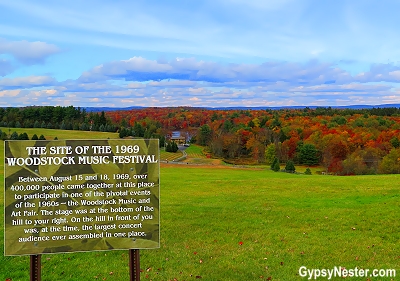
So that brings us back to our big question, how did several hundred thousand hippies fit into the local mix?
Surprisingly well, it seems.
The curators are proud to point out that there were no major incidents or arrests during the festival and that many of the area’s residents came to the rescue by bringing in food and supplies when the original supplies proved woefully inadequate.
It really was three days of peace and music.
David, GypsyNester.com
>Anyone that got to go to this, were the lucky ones!!
>I was 14 – didn't know what was going on. Was an eternal (and still am) Beatlemaniac!
>awww…me too. I was only 10 yrs. old too…I didn't get much of it being a sheltered girl from Southern Oregon. It was more understandable to me once I met my hubby- 6 years older than I.
>I was 18 back then and my mom just start letting me venture to the shore with my friends for the weekends let alone letting me go to Woodstock. But, yes………I knew a lot of kids who went, but most of them weren't So. Philly, Italian girls who graduated from St. Maria Goretti in 1969! LOL
>I was 17 at the time, but not a flower child. I would say I was there in spirit as I did like the music and I remember watching it on the news. I had a friend at work that went and she said it was wild !! She stated that the music was good but other than that…. lots of drugs, mud and she didn't stay very long, as it was just too much!
>I PLOTTED FOR MONTHS AS TO HOW I WAS GOING TO GET TO WOODSTOCK, NO CAR, NO MONEY, NO KNOWLEDGE OF THE OUTSIDE WORLD, YEP I STAYED HOME.
>Spent the weekend with my friend who was part of that era of Sex, Drugs and Rock-n-Roll. Although, I was only 10 yrs old during that time, I certainly enjoy the songs/lyrics of "peace and love". Rock On!
>My father loved the Kennedy's and so do I. I will never forget my father crying for days when President Kennedy was assassinated. I have cried also for John, Bobby, John Jr. as well as for Jackie. The Kennedy's are part of my heritage.
>I would dearly love to go back and see the original sight and the Bethel Woods Center for the Arts. I haven't been back to New York since they created it.
I,for one, actually did go to Woodstock in a "magic bus" (an authentic hippie painted rattle trap VW van which belonged to my friend) – I thought I was going to go see a normal concert and then do the NY tourist thing – boy, was I wrong, lol.
To me, 40 years later, it's still amazing that nearly half a million people managed to get through a weekend of those conditions (mud, rain, no food, no bathrooms, etc) in relative peace and harmony.
On Sunday Max himself got up and addressed the crowd and basically said how proud he was that so many young people could get together and do it peacefully. Amazing considering his land was pretty much trashed by that time.
I also remember being so grateful we had brought a big cooler with us, stocked up for camping – though I remember people pretty much shared what they had. Thank God for peanut butter is all I can say!
Peace Out!
Great story, so good to hear from someone who was actually there!